When it comes to production safety, the chemical industry is accelerating its shift toward preventive safety management and proactive risk control. Making use of digital and intelligent technologies to enhance safety has become an urgent requirement for the high-quality development of the entire industry.
On July 27, Sinochem Holdings Corporation Ltd. (Sinochem Holdings) unveiled the FORUS system, a large language model (LLM) to enhance workplace safety in the chemical industry. As the first specialized safety LLM independently developed for China’s chemical industry, the FORUS system marks a major breakthrough made by Sinochem Holdings in integrating artificial intelligence with workplace safety.
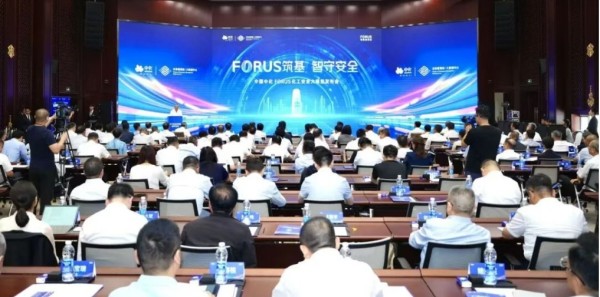
On July 27, Sinochem Holdings Corporation Ltd. (Sinochem Holdings) officially unveils the FORUS system, a large language model to enhance workplace safety in the chemical industry. [Photo/sasac.gov.cn]
Tackling Challenges
The chemical industry features intensive high-risk processes, a wide range of hazardous chemicals and complex production scenarios. Its safety management has faced common challenges, such as the reliance on manual efforts to identify potential hazards, cumbersome review rules for work permits and fragmented knowledge of safety regulations and standards. Conventional management models can no longer meet the needs of modern chemical production for more precise and intelligent safety management and risk control.
To tackle these challenges, Sinochem Holdings has systematically enhanced its AI-enabled health, safety and environment capabilities, and built a professional AI tool tailored to the actual operation of the chemical industry and in compliance with the safety management system of central State-owned enterprises.
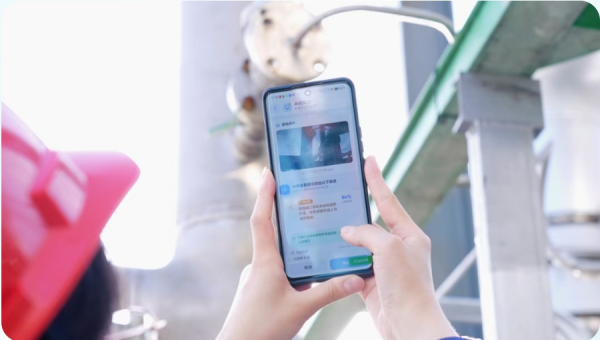
Using the FORUS system, workers can identify potential hazards with AI tools. [Photo/sasac.gov.cn]
The FORUS system can be used in various scenarios, including system management, risk prevention and control, hidden hazard elimination, workplace safety and emergency response. It drives three major transformations in workplace safety management: from experience-driven management to data- and intelligence-driven management, from passive response to proactive prevention, and from isolated, point-based control to holistic, collaborative governance.
Improving Dataset
Data serves as the foundation of LLMs. In terms of data development, Sinochem Holdings, by leveraging its all-embracing work scenarios and its long-term management experience, has established a dedicated and comprehensive chemical safety dataset that covers more than 10 major categories, including professional chemical knowledge, laws and regulations, emergency plans and accident cases. This precise, tailored and comprehensive dataset ensures that the FORUS system complies with the professional standards and operational realities of the chemical industry.
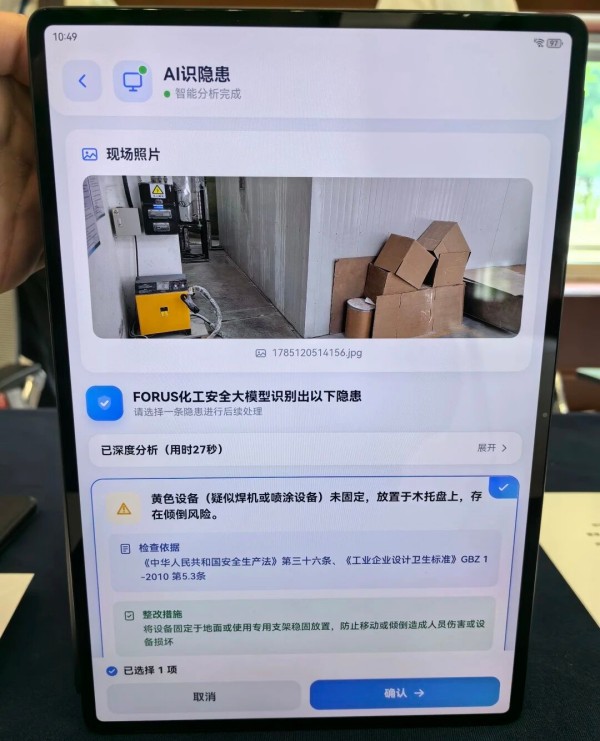
A glimpse of how the FORUS system works. [Photo/sasac.gov.cn]
As for its technological capabilities, the FORUS system enables precise knowledge retrieval, image and text recognition, analysis of complex working conditions and utilization of various professional tools.
With a focus on high-frequency scenarios in chemical production, the corporation has launched a number of practical applications, including rapid reporting on potential hazards, intelligent work permit review, intelligent emergency response and safety knowledge Q&A. These functions assist frontline employees with risk identification, safety permit compliance checks, emergency response assessment, and the retrieval of relevant regulations and standards. In this way, AI technologies are fully embedded into on-site safety management and production processes.
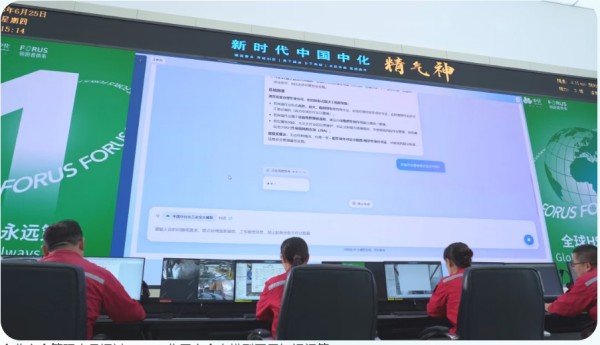
Safety management staff participate in a Q&A test prompted by the FORUS system. [Photo/sasac.gov.cn]
Moving forward, Sinochem Holdings will fully leverage its advantages in the chemical industry and play its exemplary role in optimizing the professional chemical safety dataset and upgrading the core capabilities of the LLM. By doing so, the corporation aims to build a leading AI safety benchmark and enhance safety in the chemical industry.
(Executive editor: Zuo Shihan)